Sale

Baxter, Richard
Anger Management - Pocket Puritans (Baxter)
$3.00
$5.00

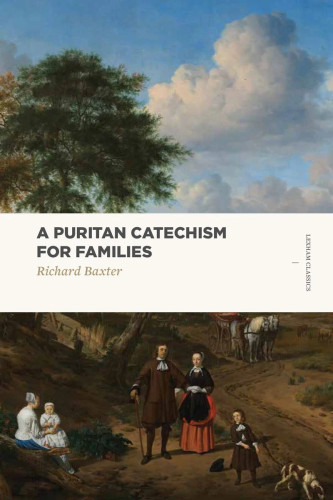
Description
"Originally published as: The Catechising of Families."
Contents
The Reasons and Use of this Book
Part I
The Introduction
How to know Ourselves by Nature
Of the Natural Knowledge of God and Heaven
Of God's Kingdom, and the Government of Man, and Providence
Of God's Law of Nature, and Natural Officers
Part II
Of the Christian Religion, What it is, and of the Creed
Of Believing, what it Signifieth in the Creed
Of the First Article
Of God's Almightiness and Creation
Of the Person Jesus Christ, the only Son of God
How Christ Was Conceived by the Holy Ghost
Suffered under Pontius Pilate
The Third Day He Rose Again from the Dead
He Ascended into Heaven, and Sitteth on the Right Hand of God
From Thence He Shall Again Come to Judge
I Believe in the Holy Ghost
The Holy Catholic Church
The Communion of Saints
The Forgiveness of Sins
The Resurrection of the Body
Of the "Life Everylasting"
Part III
What is the True Use of the Lord's Prayer
"Our Father Which Art in Heaven," Expounded
"Hallowed be Thy Name"
"Thy Kingdom Come"
"Thy Will Be Done on Earth, As it Is in Heaven"
"Give Us this Day Our Daily Bread"
"And Forgive us our Tresspasses"
"And Lead us Not into Temptation, but Deliver us from Evil"
"For Thine is the Kingdom, the Power, and the Glory, for ever"
Part IV
Of the Ten Commandments in General
Of the Preface to the Decalogue
Of the First Commandment
Of the Second Commandment
Of the Third Commandment
Of the Fourth Commandment
Of the Fifth Commandment
Of the Sixth Commandment
Of the Seventh Commandment
Of the Eighth Commandment
Of the Ninth Commandment
Of the Ninth Commandment
Part V
Of the Sacred Ministry, and Church, and Worship
Of Baptism
Of the Sacraments of Christ's Sacrificed Body and Blood
Of Preparation for Death and Judgement
About the Author
Richard Baxter (1615-1691) was ordained in 1638 and served in ministry at Kidderminster. A Puritan Nonconformist pastor, he resisted the governance of the Church of England and renounced his ordination. Baxter became notorious for his ecumenical beliefs during a time of great religious conflict, and he was sentenced to prison for his paraphrase of the New Testament. He wrote prolifically throughout his life, and although he contributed to Puritan theology, he was unique in rejecting limited atonement and believing that repentance and obedience could affect one's salvation. Though controversial in his time, his written works are today valuable for their theological strengths.
Baxter, Richard

Baxter, Richard
Baxter, Richard

Baxter, Richard

Baxter, Richard

My Personal Guarantee to You
For over 30 years, I have personally reviewed and approved every book we sell at Reformation Heritage Books. My aim has always been to place into your hands books that are biblically and theologically sound, warmly Reformed, deeply experiential, and eminently practical—books that truly nourish the soul and your daily life as a Christian.
Here’s my personal guarantee: if you purchase a book from us and do not find it profitable, we gladly offer a full refund—shipping included. Feed your soul and mind with a good book today.
With warmest regards in Christ,
Dr. Joel R. Beeke
Founder and Chairman, Reformation Heritage Books