Sale

Carrick, John
The Preaching of Jonathan Edwards (Carrick)
$19.00
$32.00

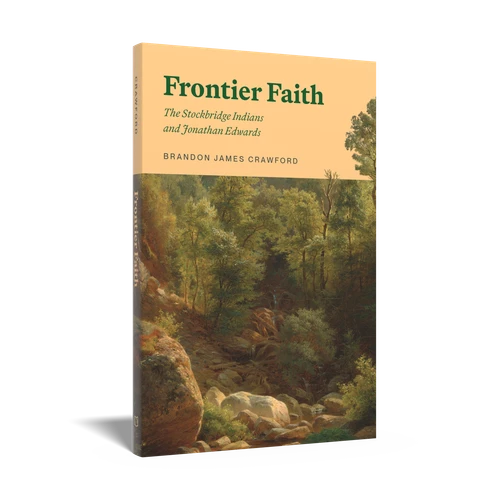


On a cold January day in 1751, Jonathan Edwards—powdered wig, black robe, Geneva bands—stepped into the pulpit of a wooden mission church on the Massachusetts frontier. Before him sat several dozen Indians in breechcloths, leggings, and moccasins. He began to preach.
For generations, history has treated this moment as an exile: Edwards, dismissed from the most prominent pulpit in New England, retreating to the wilderness to write philosophical treatises while largely ignoring the people he was sent to serve. The typical portrait of the Stockbridge Indians is hardly better: silent extras in Edwards’s drama, spiritually cowed by their colonial neighbors.
Both accounts are wrong.
Drawing on long-neglected sources, Brandon Crawford tells a richer story. Far from a disengaged exile, Edwards poured himself into the spiritual lives of a people navigating rivalries between English Puritans, Dutch merchants, French Jesuits, Mohicans, Mohawks, and others on the volatile colonial frontier. And the Indians were no silent extras. They embraced, adapted, and shaped the Christian faith in ways that were at once evangelical and distinctly their own. What emerges is a portrait of a pastor and a people who, against all odds, were earnest in their commitments to the gospel, the mission, and each other.
Endorsements
“An important work...erudite and judicious...written with a sense of verve that engages the reader.”
—David Luke
“A compelling and eye-opening history.”
—Ryan Martin
“A major contribution to Edwards studies, church history, and missiology.”
—Joel R. Beeke
Contents
Acknowledgments
Introduction: Beyond the Pale
Conclusion: Making Their Hopes Prevail
Appendix: What Became of the Stockbridge
Indians and Jonathan Edwards?
Bibliography
Carrick, John

Edwards, Jonathan
Borgman, Brian

Marsden, George M.


My Personal Guarantee to You
For over 30 years, I have personally reviewed and approved every book we sell at Reformation Heritage Books. My aim has always been to place into your hands books that are biblically and theologically sound, warmly Reformed, deeply experiential, and eminently practical—books that truly nourish the soul and your daily life as a Christian.
Here’s my personal guarantee: if you purchase a book from us and do not find it profitable, we gladly offer a full refund—shipping included. Feed your soul and mind with a good book today.
With warmest regards in Christ,
Dr. Joel R. Beeke
Founder and Chairman, Reformation Heritage Books